Triceratops

Triceratops horridus

Late Cretaceous · Ceratopsian

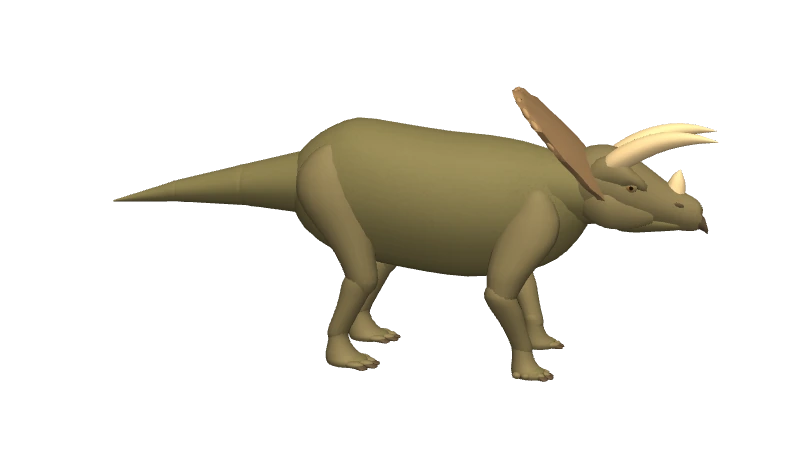
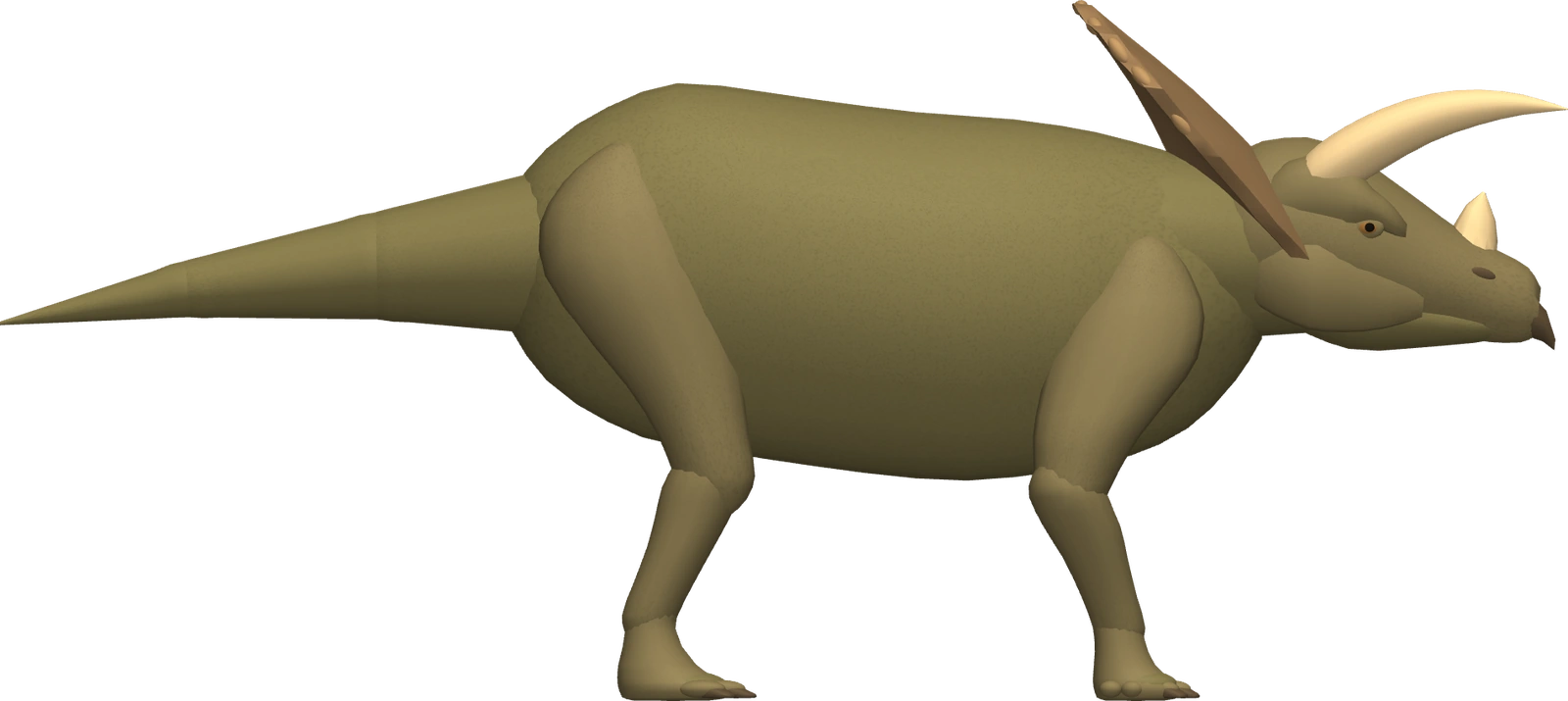
Anatomical Triceratops with a broad frill, three horns and four weight-bearing limbs

Anatomical reference

Start with the animal

The adult model carries its head over flexed forelimbs. Rotate it to compare the smaller, outward-facing forefeet with the broader four-toed hindfeet.

MuJoCo · Adult standing pose · Rotate by dragging, swiping or using the left and right arrow keysAnatomy and walking tests

Triceratops at scale​

Comparison scale
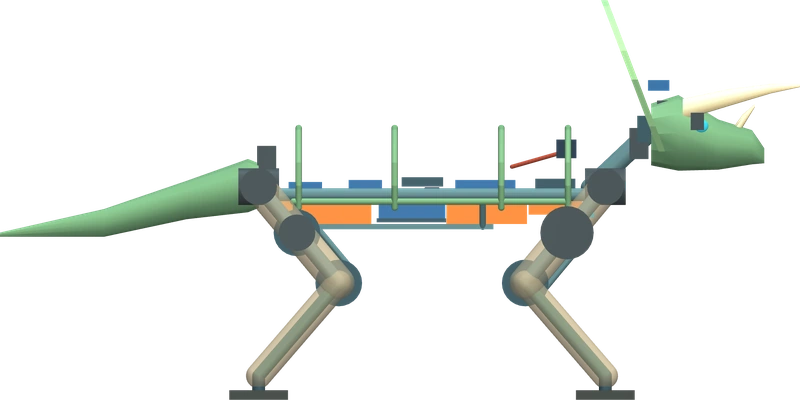
Adult Triceratops in side profileTriceratops robot in side profile1 m
Adult anatomical model7.19 m from brow horn to tail tipAnatomical model notesWatch the adult walk in real time
60 cm robot · earlier foot design1.2 m overall length · 60 cm at the frill60 cm model dimensions

At the same scale, about six of the robot models would fit along the length of the adult.

Foreleg bench-test milestone

Robot versions

These designs are studied in simulation.

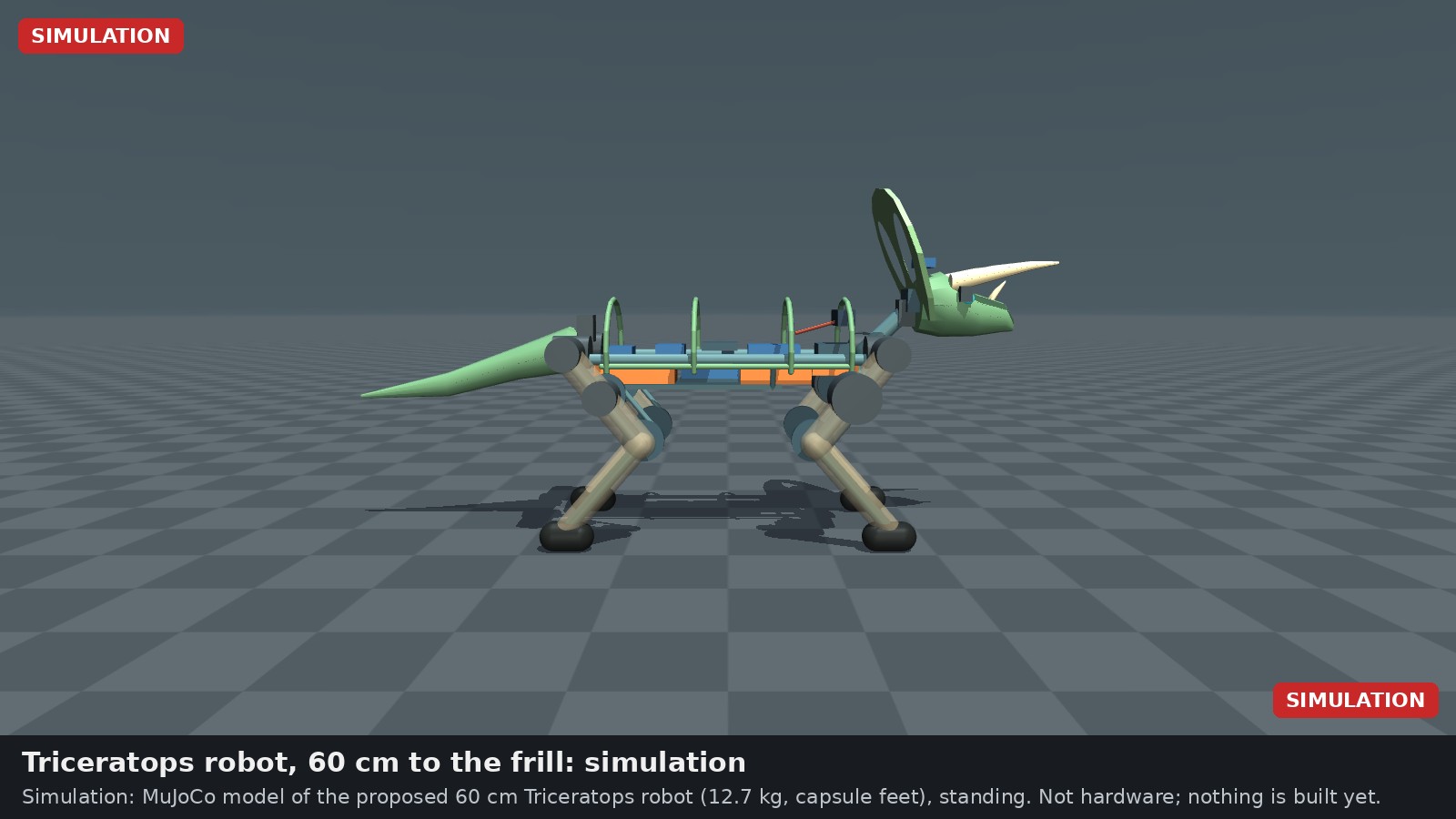
Side view of the standing 60 cm Triceratops robot on its rounded capsule soles in simulation
Simulation still · Standing on capsule soles, 22 November 2026

Current design · Capsule soles

The 60 cm Triceratops design

The selected design stands 60 cm at the frill and measures 1.2 m from horn tip to tail tip. On 22 November the lab selected rounded capsule soles. The walking and ramp results below used the preceding foot design. The Q3 2027 target is to assemble the four-legged robot and demonstrate a physical walk.

Target mass
About 12 kg. The model shown has a simulated mass of 12.7 kg.
Next physical test
One foreleg on the bench.

Movement studies · 60 cm

Locomotion · Learned controller

Learning to trot

With the speed set to 0.25 m/s, the learned controller reached 0.238 m/s. The feet cycled in diagonal pairs about 2.4 times a second. The left hind knee averaged 1.10 times its modeled continuous torque rating.

Read the gait report

Locomotion · Model-based controller

Testing the trot

Across 40 flat-floor trials, the robot stayed upright and traveled at 0.247–0.254 m/s.

Read the trial results